
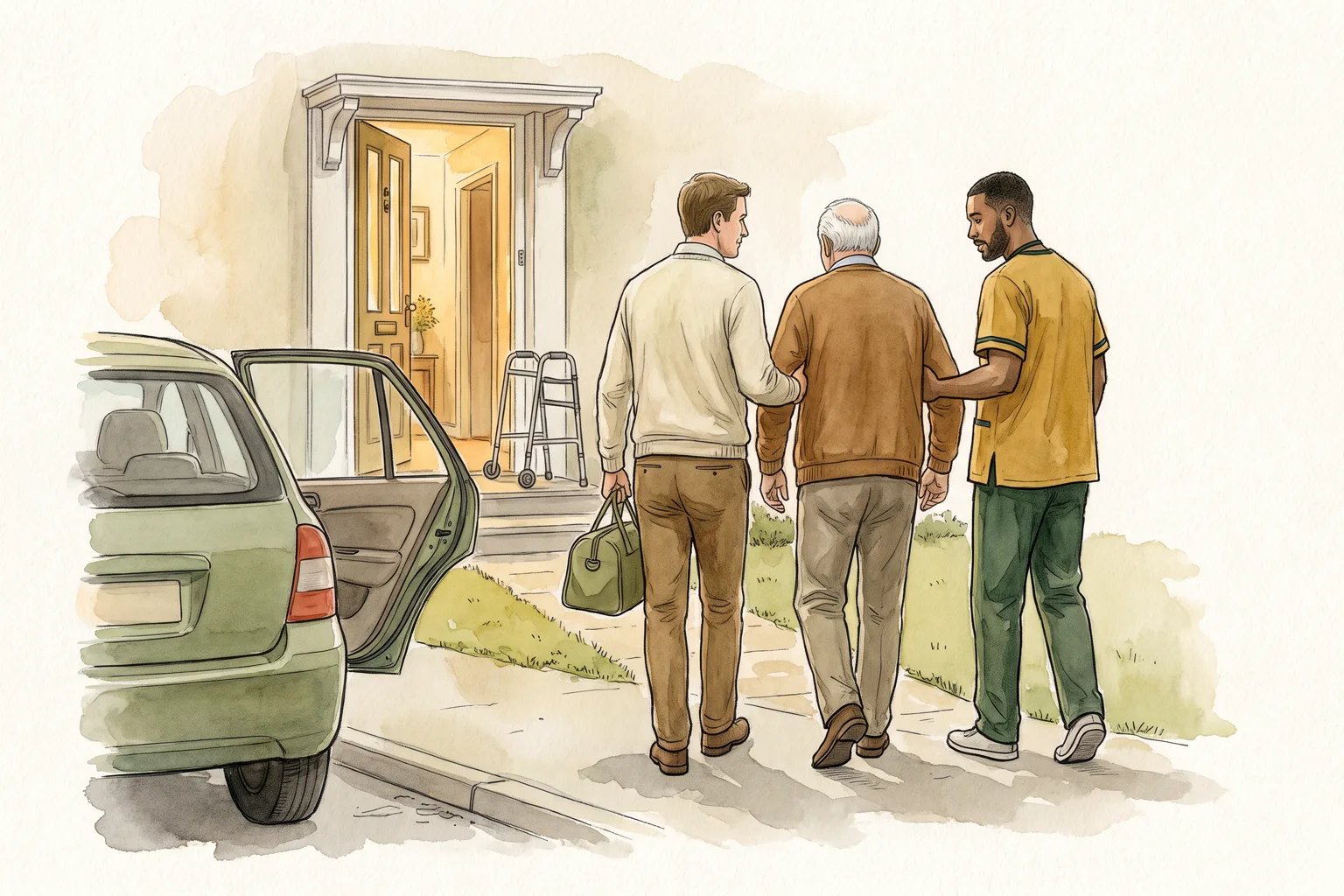
Home care after hospital in Calgary starts before the discharge, in a conversation most families are not ready for. Someone says “you can go home tomorrow”, a bag is packed, and the questions arrive in the car park: which medicines changed, who is coming to the house, what do we do at 2 a.m. if something looks wrong. This checklist is built from Alberta’s own discharge guidance so you can ask those questions while the people who can answer them are still in the room, and so the first week at home has a shape.
It makes no promises about recovery; nobody honest can. What it does is make the week less improvised.
Before you leave: the discharge conversation
Alberta Health Services publishes a short patient guide, My Next Steps: Getting ready to leave the hospital, and its advice is practical. Have someone you trust join the conversation, in person, by phone or by video. Ask for a written summary of the stay and the medicines. You may record the conversation on your phone or with the AHS My Care Conversations app, because nobody remembers all of it. Then ask, and write down the answers:
- Medicines. Which have been added, kept or stopped, and where is that written down? Who will review the home medicine schedule with us? What if the pharmacy is closed when we get home?
- Equipment and supplies. Will we need handrails, a walker, a commode, dressings or other supplies? Who arranges them, and will they be there before we are?
- Home care. Has a referral to home care been sent? Who do we contact if we have questions about it? If the person was not already a home care client, the hospital team can start the assessment, or you can call Health Link at 811.
- Follow-up. Which appointments and tests are booked, and which are ours to book? Which lab requisitions are we taking home?
- Everyday activities. What can and cannot be done yet: stairs, driving, bathing alone, lifting, work?
- Warning signs. What should make us call, and whom do we call, at what time of day?
Take home a discharge summary, updated prescriptions, any referral information and lab requisitions. Your family doctor receives a copy of the summary and can see the hospital’s test results; if you do not have a family doctor, call 811 or use albertafindadoctor.ca. Transport home is the family’s to arrange, so settle it the day before.
Days 1 to 3: the house, the medicines, the nights
- Medicines first. Take the new prescriptions to the usual pharmacy the same day and ask for the changed list to be reconciled with what is already in the cupboard. A dosette or blister pack removes the guesswork, and it is the single thing families tell us they wish they had sorted on day one.
- A recovery zone. Bed, chair, bathroom and kitchen on one level if at all possible. Clear the walking routes of rugs, cords and clutter; add a night light between bed and bathroom; put the phone, water and the medicines list within reach of the chair.
- The first nights. This is when families are most alone. Decide now who sleeps where, who is listening, and whether an overnight caregiver for the first few nights would let the family sleep.
- A check within 48 to 72 hours. When we support a discharge, a nurse visits in the first two or three days: medicines, pain, wound or skin, eating and drinking, mobility, and a plain-language note to the family and the doctor. Whoever does it, somebody should look at the whole picture early, with the discharge instructions in hand.
- One sheet on the fridge. The medicines schedule, the warning signs from the hospital, the follow-up dates, the doctor’s and pharmacy’s numbers, 811, and the name of the home care contact. Everybody who comes into the house reads the same sheet.
Days 4 to 7: the follow-up, the help, the money
- Book what is yours to book. The family doctor visit within a few weeks, the specialist follow-up, the tests on the requisitions. Write them on the sheet.
- Chase the home care assessment. If a referral was sent from hospital, you should hear from a case manager; if not, call 811 and ask for a home care assessment. The assessment decides what the public program provides and whether funded personal care hours are approved.
- Equipment, properly. If a walker, bath aid, lift or home care bed is needed for the long term, Alberta Aids to Daily Living may fund part of it, but only after an approved authorizer assesses the need; equipment bought first is not reimbursed. Our home organization, safety and equipment service helps families through that path.
- Understand what funded hours can cover. If the case manager approves home care hours and you choose Alberta Maple Care as your provider under CDHCI, those hours can cover personal care, health-related homemaking alongside it, and respite. Nursing visits stay with the public team. Alberta Blue Cross pays $35.03 of each approved hour and the family pays the balance; nothing is reimbursed for care bought before the approval date, so keep private and funded hours clearly separate.
- Look after the caregiver. A week of broken nights is enough for anyone. A scheduled break in week two is easier to arrange than a crisis in week three.
What help at home can cover in that first week
Home care after a hospital stay is short-term and structured; it is not a nurse living in the spare room. For most families the useful pieces are these:
- Personal care in the mornings and evenings: washing, dressing, getting safely from bed to chair, a steady arm on the stairs.
- Meals that match the discharge instructions, and enough to drink.
- Medication reminders according to the plan, and a caregiver who notices when a dose was missed.
- A door-to-door escort to the follow-up appointment, with notes back to the family.
- Someone awake and present overnight while the family catches up on sleep.
- A nurse who sees the small changes and flags them to you, with pre-agreed thresholds for when to call the clinic or seek urgent care.
Our hospital-to-home recovery support is built around exactly that list, working from Alberta’s Home to Hospital to Home guideline: we confirm the discharge plan with your consent, reconcile the medicines with the pharmacy, ready the home and the equipment, do the early check, escort the follow-ups and keep a simple log the whole team can read. Where a case manager approves hours, part of it can run under CDHCI; families often add private hours for transport or extra nursing.
When to get help quickly
Follow the written warning signs the hospital gave you; they are specific to the person and the condition, and they beat any general list. Call 911 for an emergency. Health Link at 811 is available 24 hours a day for advice from a registered nurse. If you are not sure whether something counts, that is itself a reason to call.
Discharge is this week?
Call us while your family member is still admitted: . We prioritize urgent starts, a nurse leads the first visit, and we will tell you honestly on the phone what is possible and how fast. If you would rather write, the form on urgent home care is flagged urgent automatically, and we reply to every enquiry within one business day. Planning further ahead? Book a free visit, with no cost and no obligation.
Sources
- Alberta Health Services, My Next Steps: Getting ready to leave the hospital (April 2025): the discharge conversation, the medicine, equipment, home care and follow-up questions.
- Alberta Health Services, Getting ready to leave the hospital (read 18 October 2026): the Home to Hospital to Home guideline, 811 and finding a provider.
- MyHealth Alberta, Going home (read 18 October 2026): the discharge summary, prescriptions, referrals and lab requisitions to take home; the family doctor’s copy of the summary.
- Government of Alberta, How to access continuing care (read 18 October 2026) and AADL eligibility and application (read 18 October 2026).
- Alberta Health Services, CDHCI Client Handbook (August 2024): what funded hours cover and the rule on care bought before approval.
This checklist is general information and not medical advice. Follow the instructions your hospital team gave you; they know the person and the condition.