
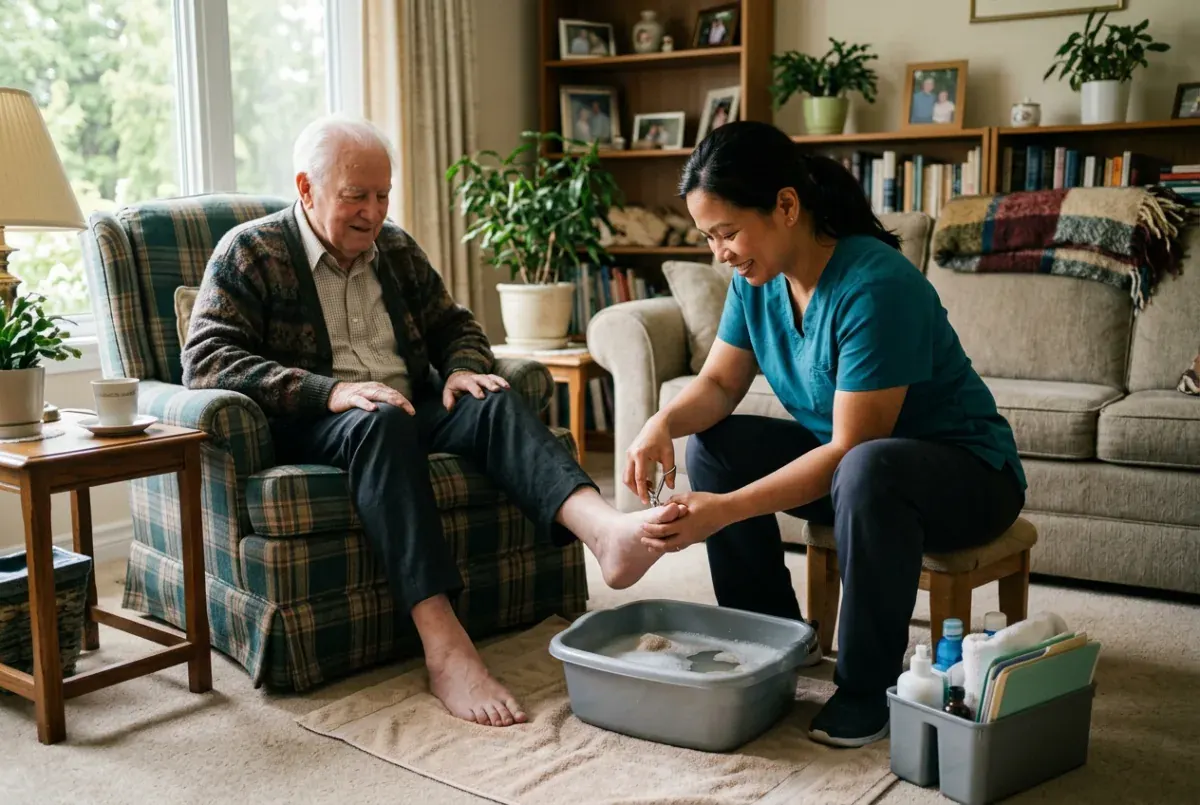
About this service
Preventive and therapeutic foot care delivered by specially trained nurses to protect skin integrity, reduce pain, and lower the risk of ulcers and infection—especially for people with diabetes, neuropathy, or circulation issues. Our nurses practise to advanced nursing foot-care competencies (assessment, risk stratification, instrumentation, education, and referral) and follow Alberta requirements for restricted/advanced activities within scope. We use Routine Practices (hand hygiene, point-of-care risk assessment, cleaning/disinfection) at every visit, and we coordinate promptly with your family physician or podiatry when problems need medical or surgical management. Canadian and international guidance emphasizes annual (or more frequent) risk-based foot screening and early care to prevent ulcers and amputations.
Who it’s for
- Adults with diabetes, neuropathy, peripheral arterial disease, foot deformities, thick/fungal nails, corns/calluses, or difficulty self-caring. Diabetes guidelines recommend routine foot exams and risk-based follow-up to prevent ulceration.
- Clients on anticoagulants, with vision or mobility limits, or who have had previous ulcer/amputation—all higher-risk groups needing regular skilled care.
- Anyone seeking safe, clinical-grade trimming/instrumentation (not a cosmetic pedicure) with escalation pathways to primary care or podiatry when indicated. Alberta podiatry resources note you can self-refer for podiatric assessment when needed
What’s included
Clinical foot assessment & risk screen
History, footwear check, skin/nail exam, pulses (as appropriate), neuropathy screen (e.g., monofilament), ulcer risk level and follow-up plan based on Diabetes Canada / IWGDF principles.
Safe nail care (non-invasive)
Trim/shape thickened nails; thin/reduce dystrophic nails where within nursing scope; cleanse and moisturize; education on straight-across trimming to prevent ingrowns. (Advanced activities are performed only by nurses with the required authorization/training per the College of Licensed Practical Nurses and Health Care Aides of Alberta (CLHA) standards.)
Corns/calluses (conservative care)
Non-invasive reduction of hyperkeratosis and pressure redistribution; off-loading pads/toe spacers and footwear advice; urgent escalation if pre-ulcerative signs are present, per prevention guidelines.
Fungal/skin conditions – coaching & referral
Recognition, basic hygiene advice, and referral to primary care for diagnostics/prescriptions when warranted.
Diabetic foot self-care teaching
Daily checks, skin care, moisture control, sock/shoe choices, and when to call—aligned with Diabetes Canada patient resources.
Documentation & care plan
Charting to national foot-care nursing competencies and Alberta privacy standards; risk-level determines recall frequency.
Referral & coordination
Direct clients/families to podiatry for ingrown nails requiring partial avulsion/matrix procedures or persistent pain/infection; Alberta sources note physician referral is often not required to book community podiatry — though podiatric surgeons contracted by Alberta Health Services do require a physician referral, and we help assemble that package when surgery looks likely.
Frequently asked questions
How often should I have clinical foot care?
Your interval depends on your risk category. IWGDF (International Working Group on the Diabetic Foot) 2023 guidance: very low risk — screening about once a year; low risk (for example, neuropathy alone) — every 6–12 months; moderate risk (neuropathy plus deformity or artery disease) — every 3–6 months; high risk (a previous ulcer or amputation, or kidney failure) — every 1–3 months. We’ll set your recall cadence after your assessment.
Do you treat ingrown toenails?
We manage mild cases conservatively (education, straight-across trimming, spacing/off-loading, infection watch). Moderate–severe or recurrent ingrowns, signs of infection, or significant pain are referred to podiatry for procedures such as partial avulsion or matrixectomy; Alberta consumer guidance and MyHealth Alberta outline these indications.
What training do your nurses have?
Advanced foot-care nurses complete specialized theory and supervised clinical training and practise to the CAFCN competency framework; Alberta LPNs providing Advanced Practice Foot Care hold advanced authorization from the College of Licensed Practical Nurses and Health Care Aides of Alberta (CLHA).
Is this covered under CDHCI or AADL?
They’re different programs. Professional nursing foot care is not a CDHCI service — CDHCI funds personal care, homemaking alongside it, and respite. Foot-care nursing can be publicly provided through Home and Community Care where the Assisted Living Alberta assessment authorizes it, or purchased privately from Alberta Maple Care. AADL is separate again: it helps with eligible equipment and supplies after its own assessment — it does not pay for the nursing visit, does not reimburse items bought without prior authorization, and requires approved vendors.
What if I have numbness or tingling in my feet?
That may reflect peripheral neuropathy (common in diabetes). We’ll screen your risk and liaise with your clinician; lifestyle and medical strategies can mitigate progression, and protective foot-care routines are essential.
Do I need a physician referral to see a podiatrist?
Not necessarily. The provincial podiatry college indicates you can self-refer; for surgical interventions, we’ll help assemble a clear referral package to a podiatric surgeon if needed.