
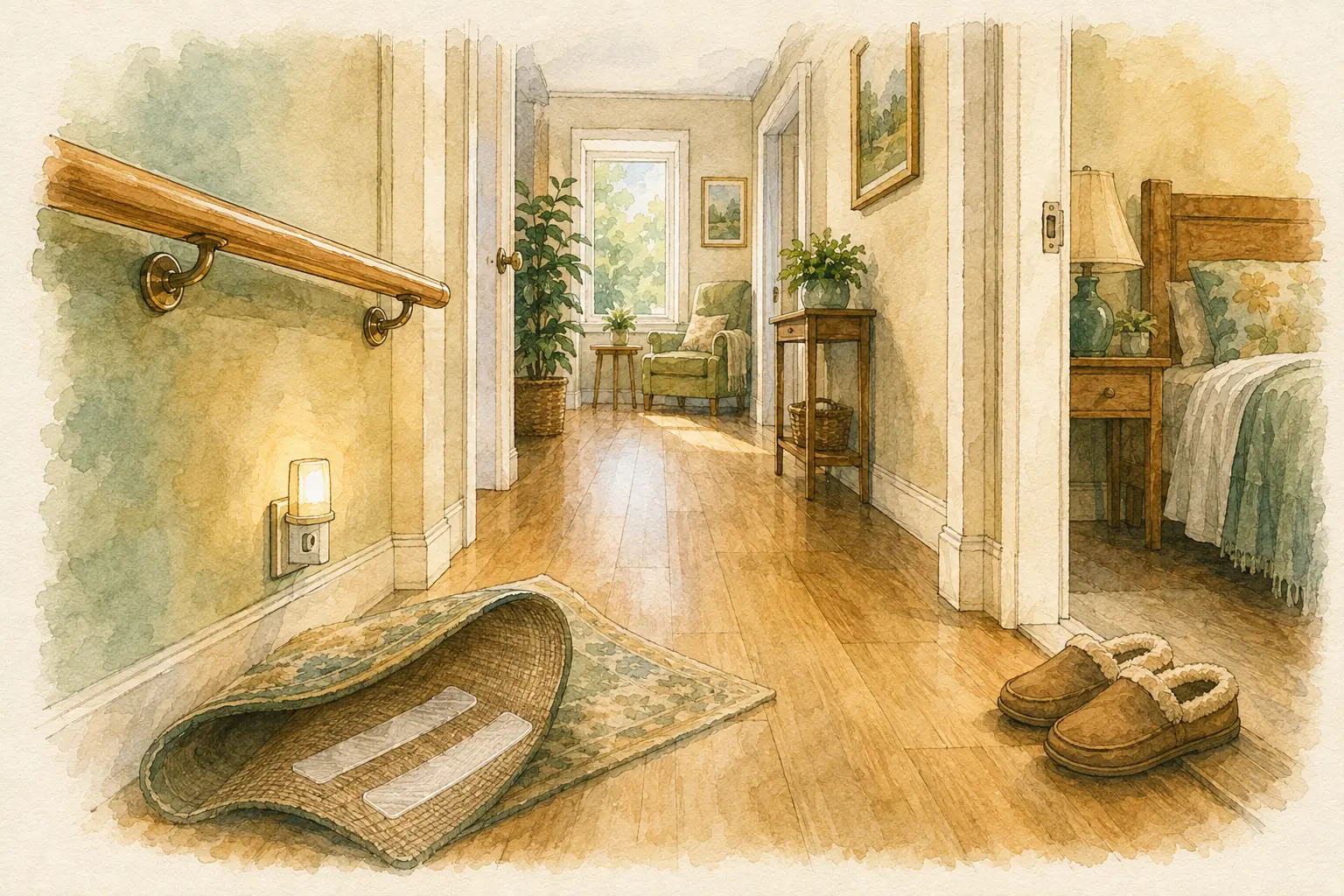
A fall almost never comes out of nowhere. Look closely and there’s usually a reason with an address: a rug that slides, a hallway nobody can see after dark, a bathtub with nothing to hold onto. That’s actually good news — because if a fall has a cause, it usually has a fix.
The five tips below are the ones that make the biggest difference in the homes we visit across Calgary. None of them require a renovation. Most cost little or nothing, and you can start this weekend.
1. Clear the paths people actually walk
Don’t try to declutter the whole house. Start with the routes that get used every day: bed to bathroom, favourite chair to kitchen, front door to car. Those few metres are where most trips happen.
- Remove scatter rugs entirely, or secure them with proper double-sided rug tape. A curled corner is a classic culprit.
- Run electrical and phone cords along walls, never across a walking path.
- Keep the floor clear of the small stuff: shoes by the door, newspapers, the dog’s toys.
- Make sure there’s room to pass furniture without turning sideways, especially with a walker.
One Calgary-specific note: the entryway. Melting snow on a smooth floor is as slippery as ice outside. A large absorbent mat inside the door, a sturdy railing on the outside steps, and a bucket of ice melt within reach all earn their keep from November to April.
2. Light every route, especially at night
Aging eyes need more light to see the same step, and the most dangerous walk in any home is the 2 a.m. trip to the bathroom. Lighting is the cheapest fall prevention there is.
- Put motion-sensor night lights along the bedroom-to-bathroom route: no switches to find in the dark.
- Keep a lamp or switch reachable from the bed, so nobody crosses a dark room to turn on the light.
- Light stairs from both the top and the bottom, and mark the edge of each step if they blend together.
- Replace dim or burnt-out bulbs everywhere. Brighter is safer, full stop.
3. Make the bathroom the safest room, not the riskiest
Hard surfaces, water, and tight spaces make the bathroom the room where falls do the most damage. It’s also the room where a morning’s work changes the most.
- Install real grab bars, anchored into wall studs, beside the toilet and in the tub or shower. A towel bar is not a grab bar; it will pull out of the wall exactly when it’s needed most.
- Use non-slip mats both inside the tub and on the floor beside it.
- Consider a shower chair and handheld shower head, so bathing doesn’t mean standing on wet porcelain.
- A raised toilet seat helps anyone who struggles to stand from low seats.
4. Check the footwear, and the mobility aids gathering dust
Backless slippers, stocking feet on hardwood, and shoes that have lost their tread cause more falls than most hazards on this list. So does the walker that lives in the closet because “it’s just to the kitchen.”
- Choose slippers and shoes with a closed back and a grippy sole, and retire the worn-out favourites.
- No walking in socks alone, ever, on smooth floors.
- If a cane or walker has been prescribed, it belongs within arm’s reach of the bed and the favourite chair, not by the front door.
- Check that aids are set to the right height and the rubber tips aren’t worn smooth. A pharmacy or physiotherapist can adjust them in minutes.
5. Look after the person, not just the house
Half of fall prevention has nothing to do with rugs and railings. Dizziness from medications, fading vision, weakening legs, and dehydration all raise the risk no matter how safe the house is.
- Ask a pharmacist or doctor to review all medications together: drowsiness and dizziness are common side effects, and combinations matter.
- Keep eye exams current, and don’t walk stairs in reading glasses.
- Keep moving. Simple strength and balance work, even sit-to-stands from a kitchen chair, protects against falls far better than sitting still does.
- Stand up slowly. A pause on the edge of the bed before walking lets blood pressure catch up.
This is where a nursing perspective earns its place. A registered nurse can often spot the pattern behind “a few stumbles lately” — a new prescription, low blood pressure on standing, an infection — before it becomes a fall with consequences.
If a fall has already happened
Take it seriously, even when the answer is “I’m fine.” A first fall is one of the strongest signals that something has changed. And the natural instinct afterward, moving less, is exactly what makes the next fall more likely. If you need support quickly, our urgent home care page explains how fast we can realistically start. If you’re weighing whether it’s a one-off or a pattern, the honest question list on is it time for home care? is a good place to think it through.
Want a second set of eyes?
You can work through all of this yourself with our printable, room-by-room home safety checklist. It covers everything above and more, in walkthrough order.
Or let us do it with you. A safety walkthrough is part of every free in-home visit from Alberta Maple Care: a nurse walks the home, flags the fixes worth making, and tells you plainly which ones matter most, whether or not you ever book care with us. Book a visit online or call 1-403-685-0053.